• Research
  • Emissary
  • About
  • Experts
Carnegie Global logoCarnegie lettermark logo
DemocracyIran
  • Donate
{
  "authors": [
    "Political Violence Researchers",
    "Rachel Kleinfeld",
    "Dalya Berkowitz"
  ],
  "type": "other",
  "centerAffiliationAll": "dc",
  "centers": [
    "Carnegie Endowment for International Peace"
  ],
  "englishNewsletterAll": "democracy",
  "nonEnglishNewsletterAll": "",
  "primaryCenter": "Carnegie Endowment for International Peace",
  "programAffiliation": "DCG",
  "programs": [
    "Democracy, Conflict, and Governance"
  ],
  "regions": [
    "United States"
  ],
  "topics": [
    "Democracy",
    "Domestic Politics"
  ]
}
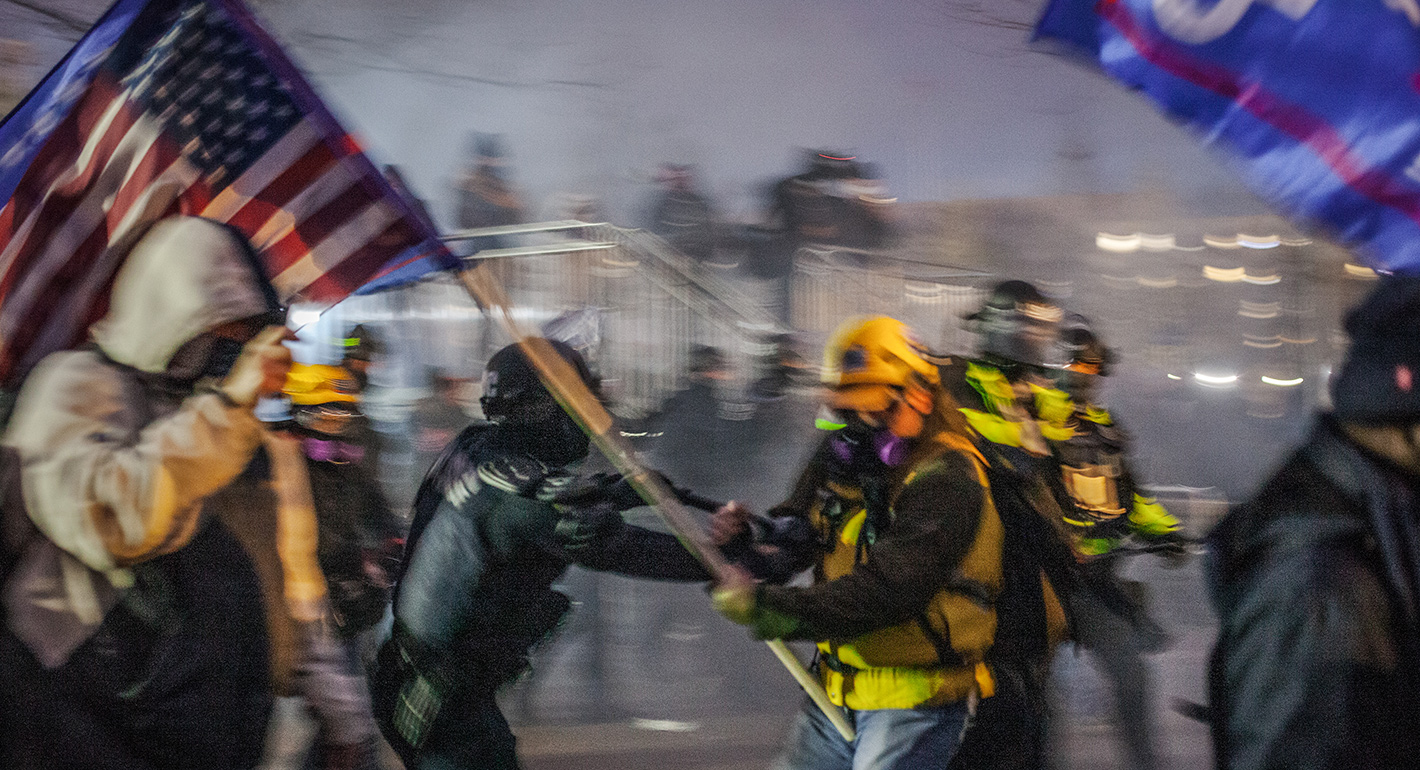
Capitol Police and MPD used physical force and tear gas to force the Trump supporters further away from the U.S Capitol, on January 06, 2021 in Washington, DC.

Source: Getty

Other

Political Violence in the U.S.

What is political violence and what works to reduce it.

Link Copied
By Political Violence Researchers, Rachel Kleinfeld, ed., Dalya Berkowitz, ed.
Published on Jun 3, 2026

Additional Links

Full Text (PDF)
Program mobile hero image

Program

Democracy, Conflict, and Governance

The Democracy, Conflict, and Governance Program is a leading source of independent policy research, writing, and outreach on global democracy, conflict, and governance. It analyzes and seeks to improve international efforts to reduce democratic backsliding, mitigate conflict and violence, overcome political polarization, promote gender equality, and advance pro-democratic uses of new technologies.

Learn More

What Is Political Violence?

  • Physical violence, threats, or intimidation that are: Intended to destabilize public institutions or democratic functions;
  • Directed by or targeted at elected officials, candidates, or pre-candidates; or
  • Aimed at marginalizing a person or group or restricting their full political, economic, or social participation.1

Nonpolitical homicides have been dropping for several years.

But threats and acts of political violence remain high.2

Threats and violent acts are having major consequences. Hate is inundating targeted communities. Public servants are leaving roles after decades of helping our communities run smoothly.3

The National Association of Attorneys General found doxxing and swatting rose from 2024 to 2025.4

While threats remain high across all groups (including white men), women, minorities, and younger officials report receiving higher rates of threats and less willingness to take part in civil service or continue in elected office as a result.5

“I get two or three really severe rashes of death threats every single year where we end up having to have police stationed outside. And it was one thing when I was single, and you know, the threat was just [to] myself, but it seems untenable that my family could also be harmed now, especially after what happened in Minnesota . . . so that’s kind of been playing into my decision about whether or not I’m going to run again next year.”17

—Laurie Pohutsky, Michigan State Representative

Which side is committing more violence is the wrong question.

The left and right have both been responsible for periods of political violence. In the 1950s, U.S. political violence largely targeted civil rights workers and mostly came from the right. By the 1960s-1970s, the left was responsible for most political violence. Political violence lessened, but moved more to the right in the 1980s, then the left in the late ‘90s and then jihadists in the early 2000s. After 2015, political violence from the right skyrocketed. Following the 2024 election, political violence from the right fell, but started to rise from the left, from a very low point.6

That said, ideology is not a good way to understand political violence today.

First, a disproportionate number of the people who commit political violence face mental health distress (although the overwhelming majority of individuals with mental health issues are victims, not perpetrators, of violence).7

Second, many of today’s perpetrators draw from a mix of ideological beliefs.8 Violence is growing for policy reasons, such as fear of AI, that are not clearly left or right. Nihilistic violence, from people who reject the political process altogether, is a growing concern.9 Both left and right are nearly equally targeted—at times by their own side.

Third, young people are more likely than older people to support violence.10 Frustration at a government that isn’t answering problems has combined with social “scripts” that offer aggrieved young people a violent template for response.

Finally, political violence from the government grew in 2025, especially from ICE. This may be replacing previous right-leaning vigilantism.11 In 2025, 32 people died in ICE custody.12 In 2026, as of March 19, ICE has killed two protesting Americans and at least 13 people died in ICE custody.13 Since January 2025, immigration agents have shot at people in at least 24 incidents.14 In 2025, law enforcement used less-lethal munitions in 22% of protests with police engagement, almost four times the rate in 2024.15

Threats and harassment are causing crucial talent to leave government and are affecting the quality of our representation, according to Bridging Divides Initiative/Civic Pulse data. In 2025, local public servants reported that as a result, they were:

  • 47% were less willing to work on controversial topics
  • 46% were less willing to run for higher office
  • 43% were less willing to run for re-election or go to public events
  • 37% were less willing to be in public spaces16
“I was on the hit list. . . . There’s always been a level of risk in my job, but I had never considered that somebody could come to my home and shoot me and my wife, and . . . would my daughter be screaming in her crib? People can carry guns in the Capitol. And the chamber is a circle and the viewing galleries above it. We take votes in a fishbowl where people can stand over us with not signs, but guns. And I find that terrifying.”18

—Erin Maye Quade, Minnesota State Senator following the assassinations of Minnesota lawmakers

What We Know Works

  • Targeted rhetoric that creates a sense of fear and blame can direct violence toward particular groups.20 Political leaders should speak out to condemn political violence. Doing so is even more effective when leaders speak against violence committed by their own side.21 To ensure violence does not become normalized, everyone should speak against it—particularly young people and other groups that are more supportive of political violence.
  • Journalists should increase complexity within groups when reporting, to show that not all group members think similarly. Reducing problems to “Us vs. Them” and posing one side as an existential threat deepens divisions and increases justification for violence. Americans significantly overestimate the other side’s support for violence—which is condemned by large majorities in all parties—and correcting these misperceptions may itself reduce hostility.22 When reporting on incidents of political violence, journalists should include information on people and groups taking positive actions to reduce harm, so that violence is centered as the problem and not normalized as the solution.
  • Younger Americans, especially those who are more politically engaged, are among the most accepting of political violence. While this age gap is not new, youth acceptance of violence has increased in recent years, in part because they feel “the system” is so broken, and see no way to alter it that is not drastic.23 Giving them a sense that there is a positive future they can work toward incrementally, and sharing tangible opportunities to build something better, is important. Helping young people develop skills to identify manipulative content intended to justify political violence can also reduce their susceptibility to radicalizing narratives.24
“You got family in [redacted]. I’m taking a trip there because I’m gonna get next to one of your family members and have you feel some [explicit] pain the way you make us feel pain.”19

—excerpt from a voicemail left for a congressional office
  • The number and severity of threats, particularly against officials’ children, is concerning. Elected officials are in need of heightened protections, including funding for hard security measures, doxxing protections, and other policy changes. Community security measures—such as creating a community of help with friends who can pick kids up from school in a threat moment, neighbors reporting suspicious persons near a home, and allies across ideological divides that speak out—are effective, low-cost security improvements that may also ease the psycho-social isolation created by threats and violence for public officials.25

Almost 90% of state legislators experienced threats or attacks from 2021 to 2024, and more than half of locally elected officials (such as school board members) experienced threats or attacks from mid-2023 to 2024.26 Public servants have stressful jobs keeping everyday life running smoothly. Serious threats against them, including, often, death threats against their young children, are not okay. Everyone should be safe to do their jobs. We all have the power to choose to do better, to speak out against threats, and see others as human beings even if we disagree.27

Created by Rachel Kleinfeld and Dalya Berkowitz based on data from the previously cited organizations, Carnegie Endowment for International Peace, June 2026.

Notes

  • 1
    Definition adapted from Brazilian think tank Terra de Direitos and Justiça Global.
  • 2
    “Threats and Harassment Dashboard,” CivicPulse and Bridging Divides Initiative, 2025, https://www.civicpulse.org/threats-harassment; William Braniff, “Written Testimony,” before the U.S. Senate Committee on the Judiciary, Subcommittee on the Constitution, hearing on “Politically Violent Attacks: A Threat to Our Constitutional Order,” October 28, 2025, https://www.judiciary.senate.gov/imo/media/doc/4a3850cc-9186-4271-fe98-9caebcd5b632/2025-10-28-PM_Testimony_Braniff.pdf, START data showed a 34.5% increase in terrorism and targeted violence events in the first eight months of 2025 compared to the first eight months in 2024.
  • 3
    “The Exit Interview,” Future Caucus, 2026, https://futurecaucus.org/the-exit-interview; “Survey of Local Elected Officials on Threats and Harassment: Q3 2025,” Bridging Divides Initiative, December 11, 2025, https://bridgingdivides.princeton.edu/updates/2025/survey-local-elected-officials-threats-and-harassment-q3-2025.
  • 4
    Shuhan Wang, “The Escalating Threats of Doxxing and Swatting: An Analysis of Recent Developments and Legal Responses,” The National Association of Attorneys General, August 12, 2025, https://www.naag.org/attorney-general-journal/the-escalating-threats-of-doxxing-and-swatting-an-analysis-of-recent-developments-and-legal-responses.
  • 5
    “Survey of Local Elected Officials on Threats and Harassment: Q2 2025,” Bridging Divides Initiative, September 1, 2025, https://bridgingdivides.princeton.edu/updates/2025/survey-local-elected-officials-threats-and-harassment-q2-2025; “Survey of Local Elected Officials...Q3 2025.”
  • 6
    Ned Parker and Peter Eisler, “Political violence in polarized U.S. at its worst since 1970s,” Reuters, August 9, 2023, https://www.reuters.com/investigates/special-report/usa-politics-violence/; Daniel Byman and Riley McCabe, “Left-Wing Terrorism and Political Violence in the United States: What the Data Tells Us,” CSIS, September 25, 2025, https://www.csis.org/analysis/left-wing-terrorism-and-political-violence-united-states-what-data-tells-us; Michael Jensen and Amy Cooter, “Correctly Assessing Left-Wing Terrorism and Political Violence in the United States,” Just Security, October 21, 2025, https://www.justsecurity.org/122278/correctly-assessing-left-wing-terrorism-and-political-violence-in-the-united-states; Rachel Kleinfeld, “Five Strategies to Support U.S. Democracy,” Carnegie Endowment for International Peace, September 15, 2022, figure 1, https://carnegieendowment.org/research/2022/09/five-strategies-to-support-us-democracy.
  • 7
    Alisa B. Miller et al., “The Roles of Trauma and Mental Health in Preventing Domestic Radicalization and Violent Extremism,” NIJ Journal 285, June 2024, https://nij.ojp.gov/topics/articles/roles-trauma-and-mental-health-preventing-domestic-radicalization-and-violent.
  • 8
    Jensen and Cooter, “Correctly Assessing Left-Wing Terrorism and Political Violence in the United States.”
  • 9
    Katherine Keneally and Cody Zoschak, “The 2025 Annual Review of Plots and Attacks Across the US,” Institute for Strategic Dialogue, March 10, 2026, https://www.isdglobal.org/publication/2025-annual-review-plots-attacks-across-us.
  • 10
    “Accelerated Transgressions in the Second Trump Presidency: Bright Line Watch February 2025 Survey,” Bright Line Watch, February 2025, https://brightlinewatch.org/accelerated-transgressions-in-the-second-trump-presidency.
  • 11
    Maanvi Singh et al., “2025 was ICE’s deadliest year in two decades. Here are the 32 people who died in custody,” The Guardian, January 4, 2026, https://www.theguardian.com/us-news/ng-interactive/2026/jan/04/ice-2025-deaths-timeline.
  • 12
    Singh et al., “2025 was ICE’s deadliest year in two decades. Here are the 32 people who died in custody.”
  • 13
    Ted Hesson, “Eleven people died in US immigration custody this year, ICE says,” Reuters, March 9, 2026, https://www.reuters.com/world/eleven-people-died-us-immigration-custody-this-year-ice-says-2026-03-09.
  • 14
    Jennifer Mascia, “How Many People Have Been Shot in ICE Raids?” The Trace, updated February 23, 2026, https://www.thetrace.org/2025/12/immigration-ice-shootings-guns-tracker.
  • 15
    Kieran Doyle, “Confrontations between ICE and protesters: How does Minnesota compare to other states?” Armed Conflict Location & Event Data, January 22, 2026, https://acleddata.com/report/confrontations-between-ice-and-protesters-how-does-minnesota-compare-other-states; “Key Political Violence and Resilience Trends From 2025,” Bridging Divides Initiative, February 11, 2026, https://bridgingdivides.princeton.edu/key-political-violence-and-resilience-trends-2025.
  • 16
    “Survey of Local Elected Officials...Q3 2025.”
  • 17
    “The Exit Interview.”
  • 18
    “The Exit Interview.”
  • 19
    Tal Kopan and Jim Puzzanghera, “‘I hope they blow your head off ’: Violent threats pour into congressional offices, and it’s getting worse.” The Boston Globe, April 15, 2026, https://web.archive.org/web/20260415143935/https://apps.bostonglobe.com/2026/04/nation/threats-to-lawmakers-rising.
  • 20
    Cathy Buerger, “Speech as a Driver of Intergroup Violence: A Literature Review,” Dangerous Speech Project, June 16, 2021, https://www.dangerousspeech.org/libraries/speech-as-a-driver-of-intergroup-violence-a-literature-review.
  • 21
    Nathan P. Kalmoe and Liliana Mason, Radical American Partisanship, Chicago Studies in American Politics (University of Chicago Press, 2022), 180-87.
  • 22
    “Accelerated Transgressions in the Second Trump Presidency;” David Montgomery, “What Americans Really Think About Political Violence,” YouGov, September 12, 2025, https://yougov.com/en-us/articles/52960-charlie-kirk-americans-political-violence-poll; Samantha L. Moore-Berg et al., “Exaggerated meta-perceptions predict intergroup hostility between American political partisans,” Proceedings of the National Academy of Sciences, U.S.A. 117 (26) 14864-14872, https://doi.org/10.1073/pnas.2001263117 (2020).
  • 23
    Ellyn Maese and Zacc Ritter, “Youth, Loneliness and Political Violence in the U.S.,” Gallup, December 3, 2025, https://news.gallup.com/poll/697745/youth-loneliness-political-violence.aspx.
  • 24
    “Preventing Youth Radicalization: Building Resilient, Inclusive Communities,” SPLC and PERIL, 2022, https://www.splcenter.org/resources/guides/peril/; “Assessments & Impact,” SPLC and PERIL, 2025, https://www.splcenter.org/resources/guides/peril-assessments-impact; Jon Roozenbeek and Sander van der Linden, “The Fake News Game: Actively Inoculating Against the Risk of Misinformation,” Journal of Risk Research, 22(5), 570–580 (2019), https://doi.org/10.1080/13669877.2018.1443491; Cecilie S. Traberg, Jon Roozenbeek, and Sander van der Linden, “Psychological Inoculation against Misinformation: Current Evidence and Future Directions,” The ANNALS of the American Academy of Political and Social Science, May 5, 2022, https://doi.org/10.1177/00027162221087936.
  • 25
    Thea Sebastian and Hanna Love, “How States Can Lead on Community Safety: Five Recommendations for Preventing and Reducing Violence,” The Brookings Institution, May 20, 2025,https://www.brookings.edu/articles/how-states-can-lead-on-community-safety-fiverecommendations-for-preventing-and-reducing-violence.
  • 26
    Gowri Ramachandran, “Intimidation of State and Local Officeholders,” Brennan Center for Justice, January 25, 2024, https://www.brennancenter.org/our-work/research-reports/intimidation-state-and-local-officeholders.
  • 27
    “Communicating on Rising Threats to Public Servants,” report by PerryUndem prepared for the Foundation for Public Service (FPS), a fiscally sponsored project of Global Impact and key partner of the Public Service Alliance (PSA), February 2026.

About the Authors

Political Violence Researchers

Created by Rachel Kleinfeld and Dalya Berkowitz based on data from the cited organizations, Carnegie Endowment for International Peace, June 2026.

Rachel Kleinfeld, ed.

Senior Fellow, Democracy, Conflict, and Governance Program

Rachel Kleinfeld is a senior fellow in Carnegie’s Democracy, Conflict, and Governance Program, where she focuses on issues of rule of law, security, and governance in democracies experiencing polarization, violence, and other governance problems.

Dalya Berkowitz, ed.

Senior Research Analyst, Democracy, Conflict and Governance Program

Editors

Rachel Kleinfeld, ed.
Senior Fellow, Democracy, Conflict, and Governance Program
Rachel Kleinfeld
Dalya Berkowitz, ed.
Senior Research Analyst, Democracy, Conflict and Governance Program
Political Violence Researchers

Created by Rachel Kleinfeld and Dalya Berkowitz based on data from the cited organizations, Carnegie Endowment for International Peace, June 2026.

DemocracyDomestic PoliticsUnited States

Carnegie does not take institutional positions on public policy issues; the views represented herein are those of the author(s) and do not necessarily reflect the views of Carnegie, its staff, or its trustees.
More Work from Carnegie Endowment for International Peace

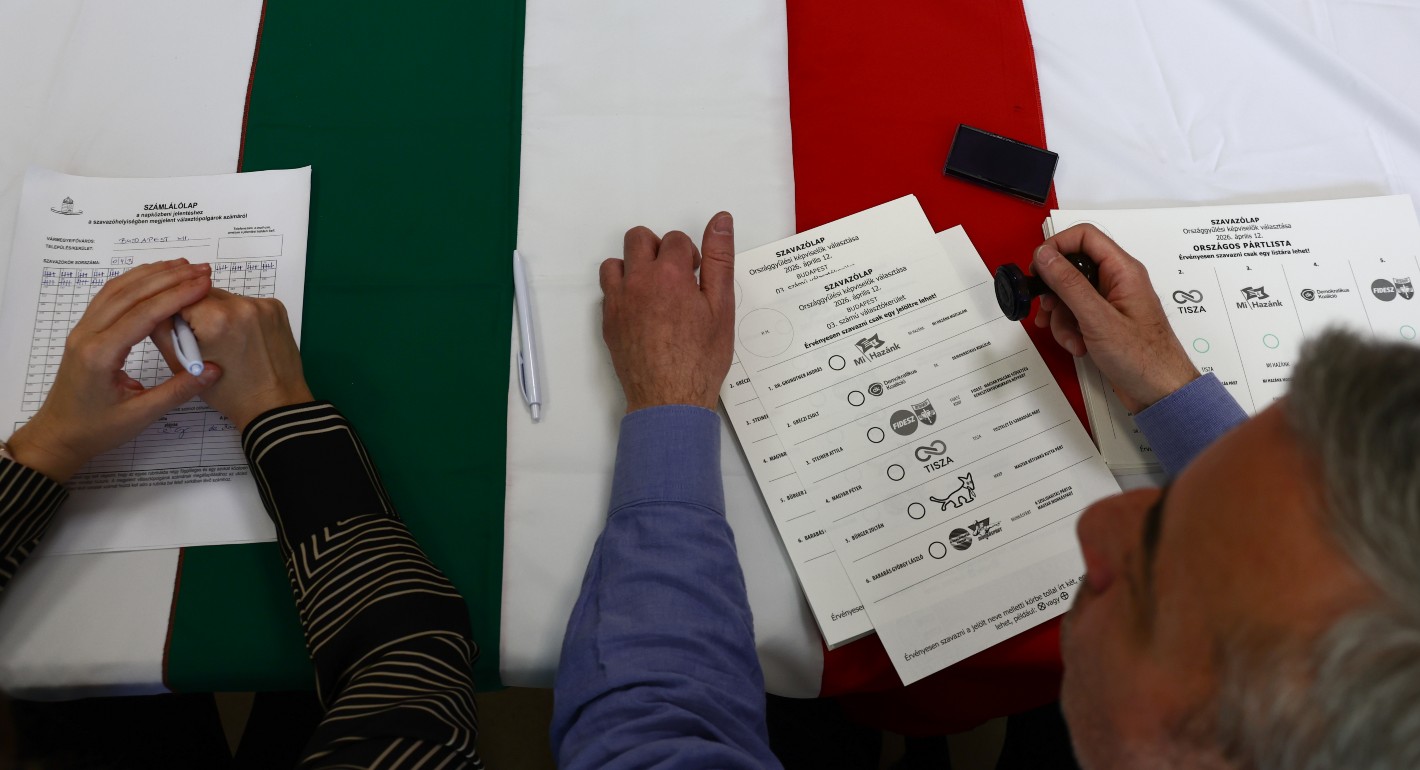
  • Photo of a person's hands holding a Hungarian voting card with a Hungarian flag tablecloth in the background.
    Article
    Civic Mobilization to Defend Electoral Integrity in Hungary

    An innovative grassroots civic initiative helped defend the integrity of Hungary’s recent elections, with significant impact on the results and positive lessons for other contexts of democratic backsliding.

      • Photo of Hanna Folsz.

      Hanna Folsz

  • Abstract image of China and AI
    Article
    China’s Pivot on Global AI

    Beijing’s AI diplomacy is pivoting from infrastructure and associated technical standards toward a more comprehensive effort aimed at recrafting global norms and institutions of AI governance.

      Arindrajit Basu

  • A drone flies in front of an Iranian flag in southern Tehran, Iran
    Article
    The Unintended Consequences of Iran’s Asymmetric Strategy and America’s AI War

    The Iran war is unique in the scope and scale of asymmetric warfare and AI-enabled conflict. These will test the limits of protecting civilians.

      Steve Feldstein

  • A visitor looks at a simulator for "electronic warfare" at the booth of German Federal Armed Forces Bundeswehr during a tour of the Hannover industrial trade fair for mechanical and electrical engineering and digital industries, in Hannover, northern Germany on April 20, 2026.
    Article
    The Effect of Military AI on Contemporary Battlefields

    AI in warfare has numerous impacts, including how they shape human responses to target recommendations and how they increase the speed at which lawful targets can be recommended.

      Yahli Shereshevsky
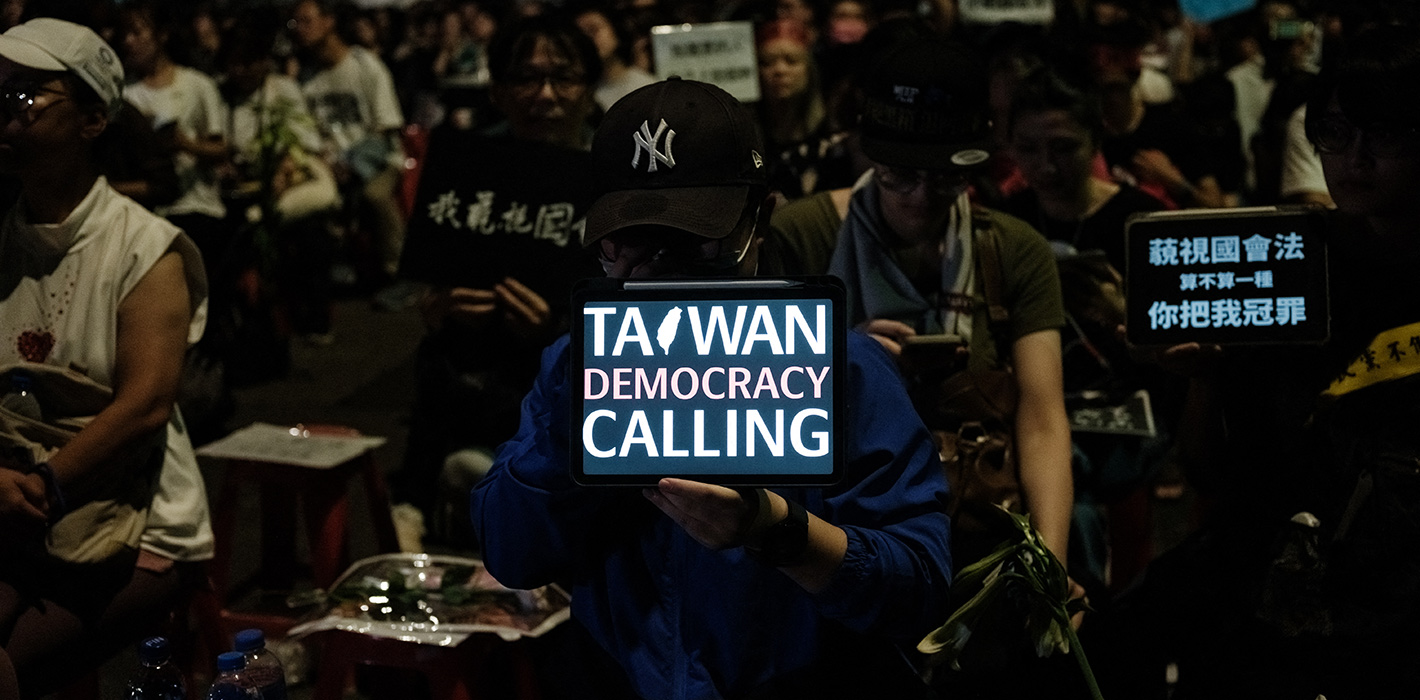
  • A demonstrator holds a tablet displaying a message as they occupy a road in protest against plans by the main opposition Kuomintang (KMT) and the Taiwan People's Party (TPP) to expand the parliamentary powers during the vote for the Parliament reform bill, outside the Parliament in Taipei on May 24, 2024. T
    Article
    Digital Hegemony and the Reification of Taiwan’s “Unification-Independence” Dichotomy

    Governments now deploy online platforms to shape public opinion and influence collective cognition. This is acutely apparent between China and Taiwan.

      • An Asian man with glasses wearing a sky blue collared shirt and black sweater stands in front of a statue of an antelope with a city skyline in the background

      Frank Cheng-Shan Liu

Get more news and analysis from
Carnegie Endowment for International Peace
Carnegie global logo, stacked
1779 Massachusetts Avenue NWWashington, DC, 20036-2103Phone: 202 483 7600
  • Research
  • Emissary
  • About
  • Experts
  • Donate
  • Programs
  • Events
  • Blogs
  • Podcasts
  • Contact
  • Annual Reports
  • Careers
  • Privacy
  • For Media
  • Government Resources
Get more news and analysis from
Carnegie Endowment for International Peace
© 2026 Carnegie Endowment for International Peace. All rights reserved.